


BECOMING REMARKABLE: THE ULTIMATE KIDS’ & MENTOR’S MASTERCLASS
By Teacher Emil Antoan | Stage for Kids Global & Inspiration for Kids
The Core Philosophy: Unleashing Your Inner Superhero
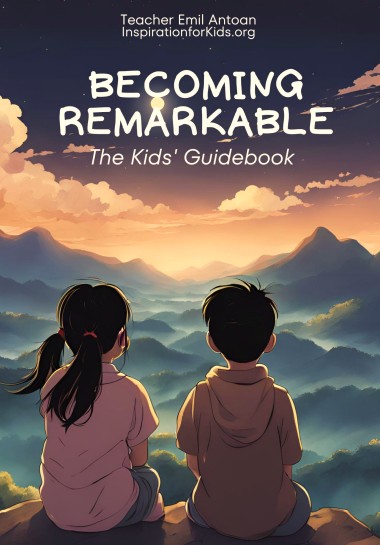
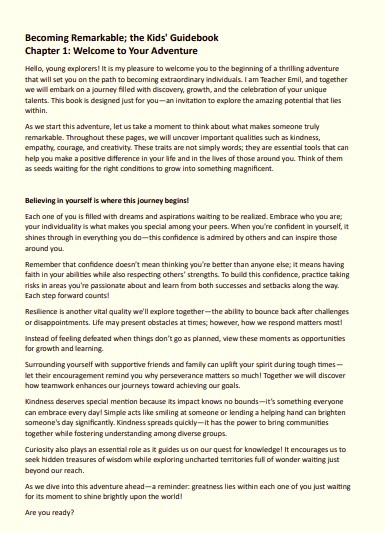
Teacher Emil Antoan’s Becoming Remarkable: The Kids’ Guidebook is an interactive blueprint designed to shift children away from passive learning and into active, compassionate, and resilient world-shapers. Growth isn’t accidental; it requires deliberate practice, courage, and a toolkit of emotional and social superpowers.
The 7 Pillars of Remarkable Growth
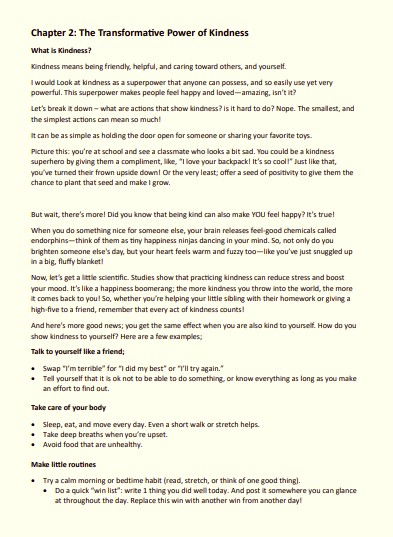
1. The Superpowers of Kindness & Self-Care (Chapters 2 & 7)
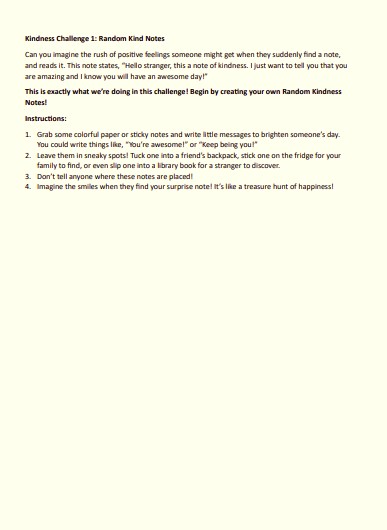
Random Kindness Notes: Kids craft sticky notes with positive messages like “You’re awesome!” and hide them in books or backpacks for strangers and friends to discover.
The 5-Day Kindness Challenge: Track one kind action a day (such as helping a neighbor carry groceries) alongside emotional reflections to understand how kindness triggers “happiness ninja” endorphins.
Self-Kindness Protocols: Children learn to treat themselves like best friends by reframing negative self-talk (“I’ll try again” instead of “I’m terrible”), taking restful breaks, and acknowledging daily wins.
2. Celebrating Diversity & Culinary Exploration (Chapter 3)
The Rainbow of Humanity: Diversity is celebrated not as a difference to fear, but as a vibrant puzzle piece that makes the world dazzling.
Cultural Food Adventures: Kitchens become magical portals where kids roll sushi for Japan, assemble custom tacos for Mexico, and mix turmeric and coriander for Indian curry while learning about global festivals.
Mandala Art & Craft: Children craft traditional Indian mandalas and Mexican piñatas to blend creativity with cultural history.
3. The Enchantment of Imagination (Chapter 4)
Pillow Fort Castles: Simple household items like blankets and chairs transform into knight-defended castles or jungle expedition outposts.
Group Storytime Chains: Friends sit in a circle, building sentence-by-sentence narrative rollercoasters (e.g., “A dancing dragon who only moves when it rains jellybeans!”).
The Power of Visualisation: Drawing from Teacher Emil’s childhood spent singing “Part of Your World” by the sea in a disadvantaged neighborhood, the text proves that early imagination directly shapes adult reality across continents.
4. Overcoming Adversity & Tactical Problem-Solving (Chapter 5)
Video Game Level Mindset: Challenges aren’t scary dragons; they are game levels that build self-confidence and problem-solving muscle when conquered.
Real-World Math & Logic Puzzles: Kids tackle brain teasers like the Library Book Race, the Cake for the Club dimension puzzle, and the Lost Bike Lock Code ($x + (x+2) + 2x = 15$) with dedicated doodle space and step-by-step hints.
The Reflection Habit: A 5-day guided journal framework teaches children to analyze daily triggers, process emotions, and write down how they can act even better next time.
5. Building Unshakeable Confidence & Support Squads (Chapter 8)
The Superhero Cape: Confidence is the cape that lets kids take risks, while courage is the spark that lights it up when they feel scared.
Affirmation Walls: Kids use colorful markers and glitter to plaster walls with daily boosts like “I am brave!” and “I am a great friend!”
The Cheer Squad: Form a team of friends who send encouraging texts, show up in silly costumes, and motivate each other through stumbles and low test scores.
6. Empathy and Active Listening (Chapter 9)
The Superpower of Empathy: Stepping into someone else’s shoes builds bridges of compassion and resolves conflicts.
Hearing vs. Listening: Hearing is passive (noticing a dog bark); listening requires focus, eye contact, nodding, and giving someone a “warm hug with your ears”.
Community Action: Empathy is put into practice by visiting animal shelters, volunteering with seniors, and painting collaborative empathy murals.
7. Mindfulness, SMART Goals, and Legacy (Chapters 10–15)
Mini-Vacation Breathing: Quick deep-breathing exercises (inhale, hold, exhale slowly) clear mental clutter and reduce stress instantly.
SMART Goal Mapping: Big aspirations are broken down into specific, measurable, achievable, relevant, and time-bound action steps tracked on vision boards.
Leaving a Legacy: Children learn that planting a tree, writing a book, or organizing a neighborhood cleanup creates a lasting impact for generations to come.